page
Categories

Search Results for

Grid List
Filter By

All Results

  • Blog
  • Celebrating over 30 years of GC Fuji® II LC CAPSULE, the world’s first light-cured glass ionomer restorative

Article

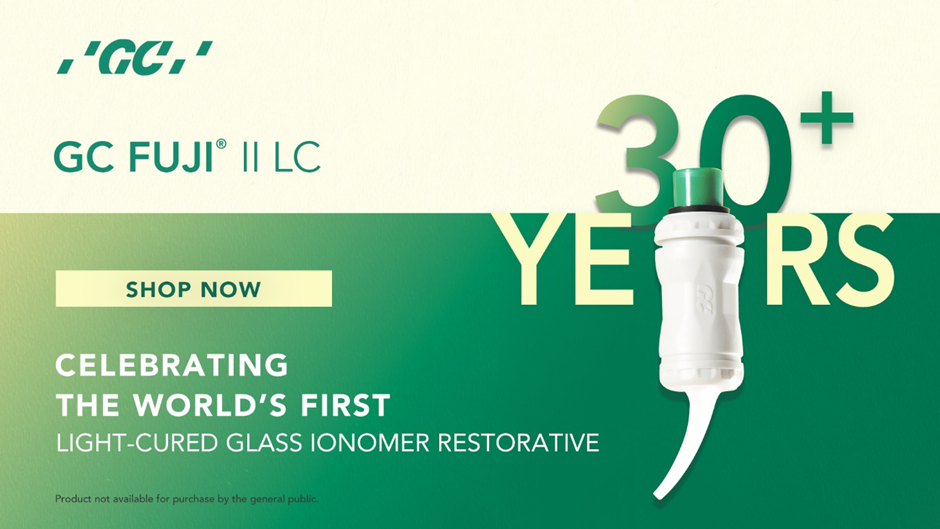
Celebrating over 30 years of GC Fuji® II LC CAPSULE, the world’s first light-cured glass ionomer restorative


The world's first resin-reinforced glass ionomer has remained the benchmark* for light-cured glass ionomer cements, delivering more than 30 years of exceptional performance to clinicians around the world.

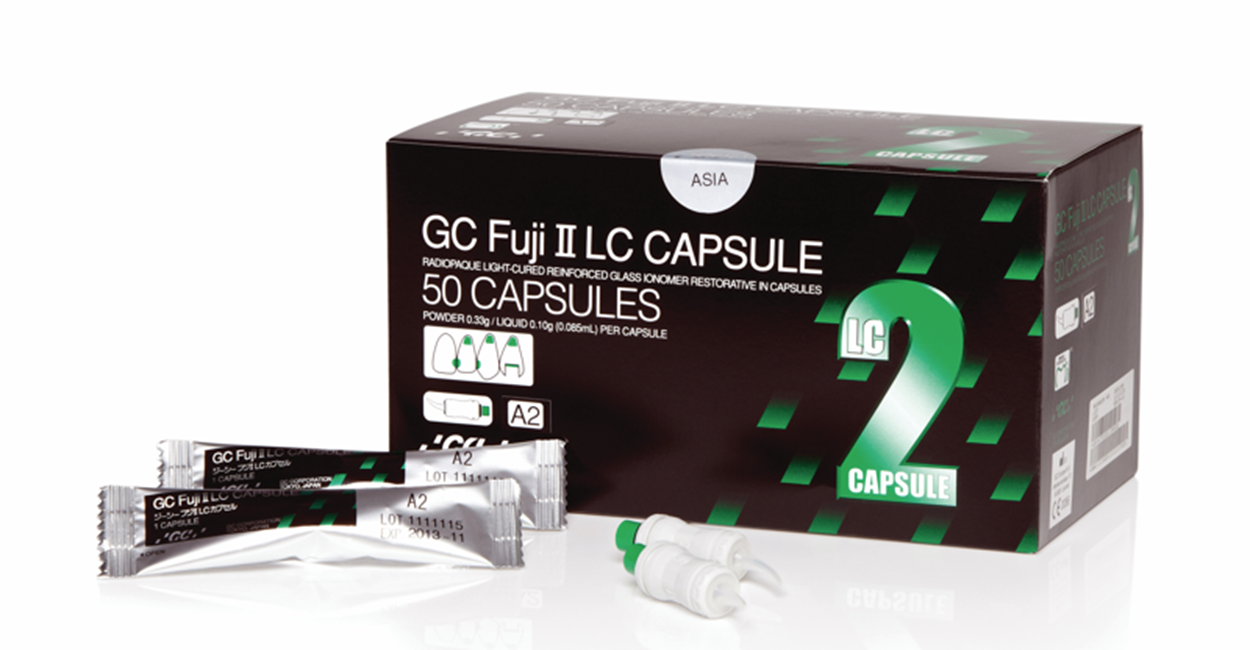
GC Fuji II LC Capsule is a self-adhesive restorative material that is moisture tolerant, simple to use, quick to apply and is ready for final finishing immediately following 20 seconds light curing.

Clinically proven GC Fuji II LC restorative brings you all the advantages of a conventional glass ionomer – plus important advances like dual curing, immediate finishing and outstanding aesthetics. With its simple, time-saving technique, GC Fuji II LC is the ideal solution for Class III & Class V restorations, particularly cervical erosion and root surface restorations. 1, 2

Clinical Applications of Fuji II LC

Restoring carious lesions

Patients with reduced salivary flow are at increased risk of caries. GC Fuji II LC is recommended for the aesthetic restoration of these lesions due to its excellent retention and high level of acid resistance.

Restoring erosion lesions

Patients with acidic oral environments may suffer frequently suffer from cervical sensitivity and subsequent development of erosion lesions. GC Fuji II LC is recommended for the aesthetic restoration of these lesions due to its acid resistance and strong adhesion which provides effective desensitisation. *

Acid resistant

GC Fuji II LC exhibits good acid resistance and is the ideal choice of material for patients with reduced salivary flow and exposure to frequent acid challenges.

Ideal delivery system

GC Fuji II LC has excellent capsule to capsule consistency and ideal access through its long curved fine-tip nozzle.


References

*Clinical evaluation of a resin-modified glass ionomer restorative: Five year results. Boghosian A, Ricker J, McCoy R. J Dent Res 1999; Spec issue 78, abst no 1436.

1 Brackett, et al. 1-year clinical evaluation of Compoglass and Fuji II LC in cervical erosion / abfraction lesions. Am J Dent 1999; 12(3):119-22.

2 Burrow MF, Tyas MJ., Clinical evaluation of three adhesive systems for the restoration of non-carious cervical lesions, Oper Dent. 2007 Jan-Feb;32(1):11-5.

Latest Blog Articles

Irradiance vs. Power: Curing Light Performance

Irradiance vs. Power: Curing Light Performance

As curing light technology improves, dentists are consistently sold on irradiance (mw per cm2) as being the defining factor in beam effectiveness. While there is no doubt irradiance adds value, it does not tell the full story of how well a light will cure various materials. Irradiance tests typically only show the irradiance of a very small portion of the light. Measuring the power distributed over the entire beam tells a more comprehensive story of its curing capabilities.

TePe EasyFit™ – An Easier Way Into a Healthy Routine

TePe EasyFit™ – An Easier Way Into a Healthy Routine

Many people find it difficult to establish a daily habit of cleaning between the teeth. TePe EasyFit™ is designed to lower the barriers and make it easier to start with interdental cleaning. Developed through extensive consumer research and tested by dental professionals across several countries, TePe EasyFit offers a simple, effective solution for patients who currently use floss, picks or interdental brushes only occasionally, or who lack motivation to begin using cylindrical interdental brushes daily at home. 

Instrument Management System

Instrument Management System

Opening an IMS™ Cassette in your practice makes a statement and tells your story. Adopting the Instrument Management System communicates that your practice is dedicated to improving efficiency, safety, compliance, organization, standardization, instrument protection, and more.

IMS is the helping hand that improves the flow of the facility, which allows the sterilization area to run more efficiently and clinicians to focus on providing Best in Practice levels of care.

Celebrating 80 Years of the Revolutionary Gracey Curette

Celebrating 80 Years of the Revolutionary Gracey Curette
This Dental Hygiene Month, we celebrate 80 years of the Gracey Curette: a revolutionary instrument that transformed dental hygiene. Since its introduction in 1945, it has expanded into a family of designs that continues to improve patient outcomes and hygienist ergonomics.

The right pH for both the patient and the dental practitioner

The right pH for both the patient and the dental practitioner
A 2004 study showed that patients judge their dental practitioner first and foremost on their skill in giving pain-free injections. Injections do not have to be something to fear – on the contrary, they can be the first step in a relationship of trust with the practitioner.