
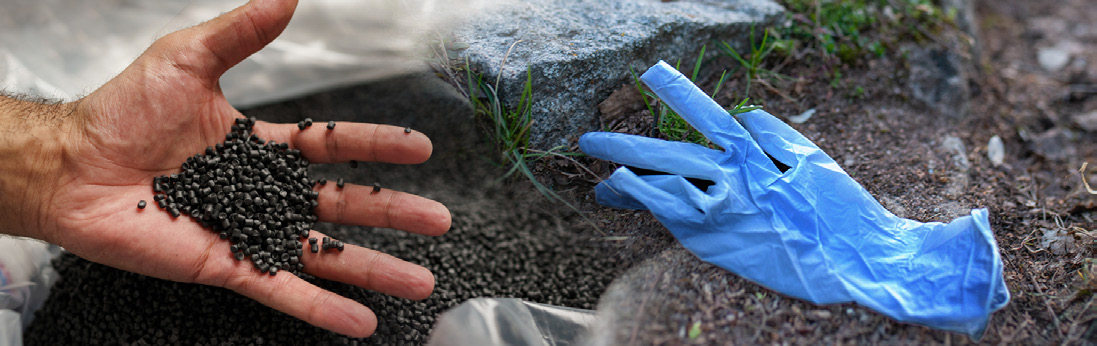
Many disposable glove manufacturers claim to sell biodegradable nitrile gloves, but those claims are often false. The first step to understanding why is to clarify the difference between degradation, biodegradation and composting.
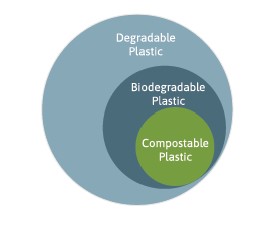
Understanding the difference between degradation, biodegradation and composting:
Degradation is the breakdown of a material over time.
Biodegradation is degradation resulting in a significant change in the chemical structure of a material caused by biological activity.
Composting is biodegradation within a defined timeframe and specific disposal systems. It is measured by the metabolism of polymer carbon by microorganisms using international specification standards (ASTM D6400, ASTM D6868 and EN 13432).
Key Takeaway
Degradation is not the same as biodegradation. Materials that break down over time do not necessarily biodegrade. Furthermore, biodegradation is a natural process, whereas composting is a human-driven process.
The facts about nitrile glove biodegradablity claims
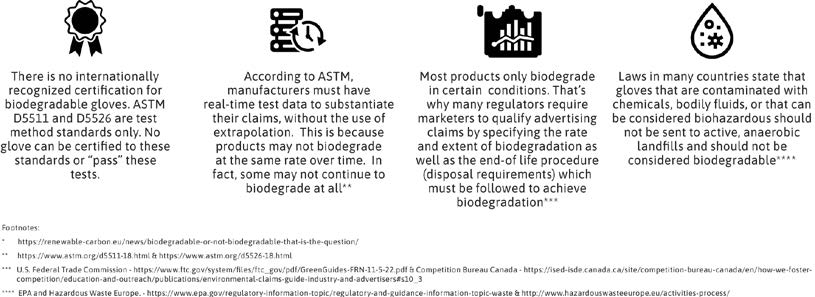
Nitrile is a fossil-based polymer and is therefore not biodegradable.Many manufacturers claim that additives to their gloves cause accelerated biodegradation - but there is no scientific evidence to support that an additive can change the molecular structure of nitrile. In reality, accelerated degradation occurs, which can result in the creation of microplastics that are harmful to humans and the environment. Nitrile degrades, it does NOT biodegrade. While the sources and data used to support nitrile disposable glove biodegradability claims may look legitimate, they are often misleading.
Disposable nitrile gloves and the environment
Life Cycle Assessments (LCAs) of disposable nitrile gloves reveal that most of their carbon footprint comes from manufacturing, NOT the waste generated after use.