

Written by Dr. Weichert & Dr. Kempkes, Group Dental Practice, Germany
Overview
When we - two former dental students - took over our parents’ dental practice, we knew one thing: we didn’t just want to make some adjustments; we wanted to rethink everything. A complete restart - building, workflows, processes.
Then reality hit: pandemic, war in Ukraine, construction cost inflation, global supply chain issues. Planning a dental practice under these conditions felt like performing surgery in the middle of a storm.
Yet it was precisely this pressure that sharpened us: if we want to operate independently of external shocks, we must design workflows that are so robust and simple that they remain stable even with fewer staff - without compromising revenue.
Our goal: roughly 25% less staff input while maintaining the same level of performance.
25% LESS STAFF, SAME REVENUE:
How a Color-Coded System Reinvented Our Practice
Dr. Christian Weichert, Benedikt Kempkes / Lahnstein
The Core Idea
A consistent, color-coded tray and tub setup system - from appointment scheduling to sterilization and material storage. Today, it’s part of our everyday workflow. And yes: it has transformed our practice.
Our Solution Built on Four Pillars
• Practice structure • Color-coded Tray & Tub Setup System • Digitization • Sustainability
These four pillars form the foundation of our approach. Our setup follows clear color-coded logic, guiding every step of the process - from the initial appointment to material management - visually and intuitively.
“Practice Structure in Color” – Bringing It into Everyday Practice
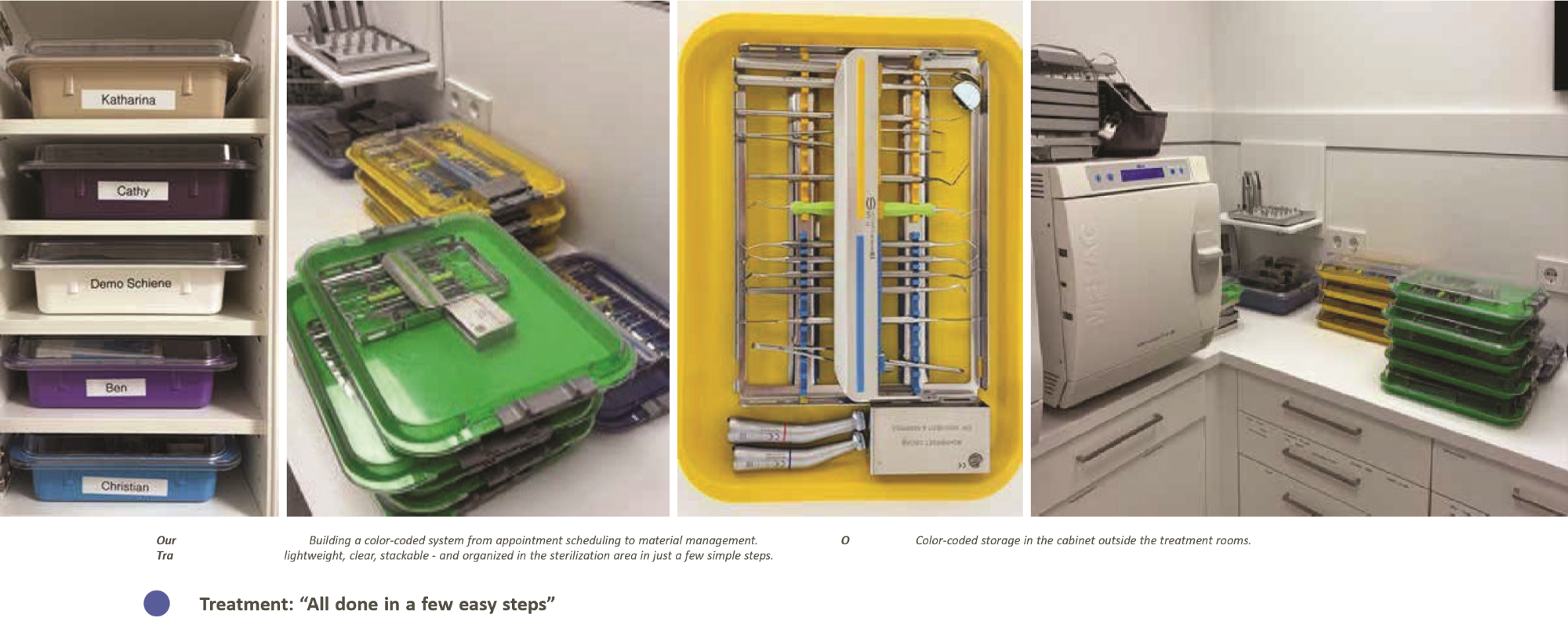
We define treatments, schedule appointments, store instruments and materials, and map out all processes - everything consistently color-coded. This brings clarity and consistency to the team’s workflow.
STEP-BY-STEP:
How the Color-Coding System Works
Scheduling Appointments: Systemic Preplanning
Our color-coded scheduling system distinguishes between long, high-revenue appointments, pain appointments, and recall slots. The result: around 10% fewer no-shows, because the rhythm and time slots are aligned with both patients and the team.
No matter what procedure, in which treatment room, or who sets it up: Everything required is ready with minimal effort. The workflows are clearly mapped out - starting from the supply storage to cabinet to treatment room to central sterilization - in the designated colors.
The Core Solution: Color-Coded Setups
The trays, procedure tubs and cabinets follow a color-coded system. Instruments, materials, and sterile items are clearly assigned, transported safely, and returned to their proper place after every treatment. This approach reduces search times, avoids duplicate preparation, and cuts down on material usage.
Overview of Components (Selection):
- Trays for standardized procedure setups (including stackable procedure tubs with clear covers for visual checks and reliable inventory control).
- Integrated sterilization workflow with color-coded instrument cassettes and trays - Same logic, different process step.
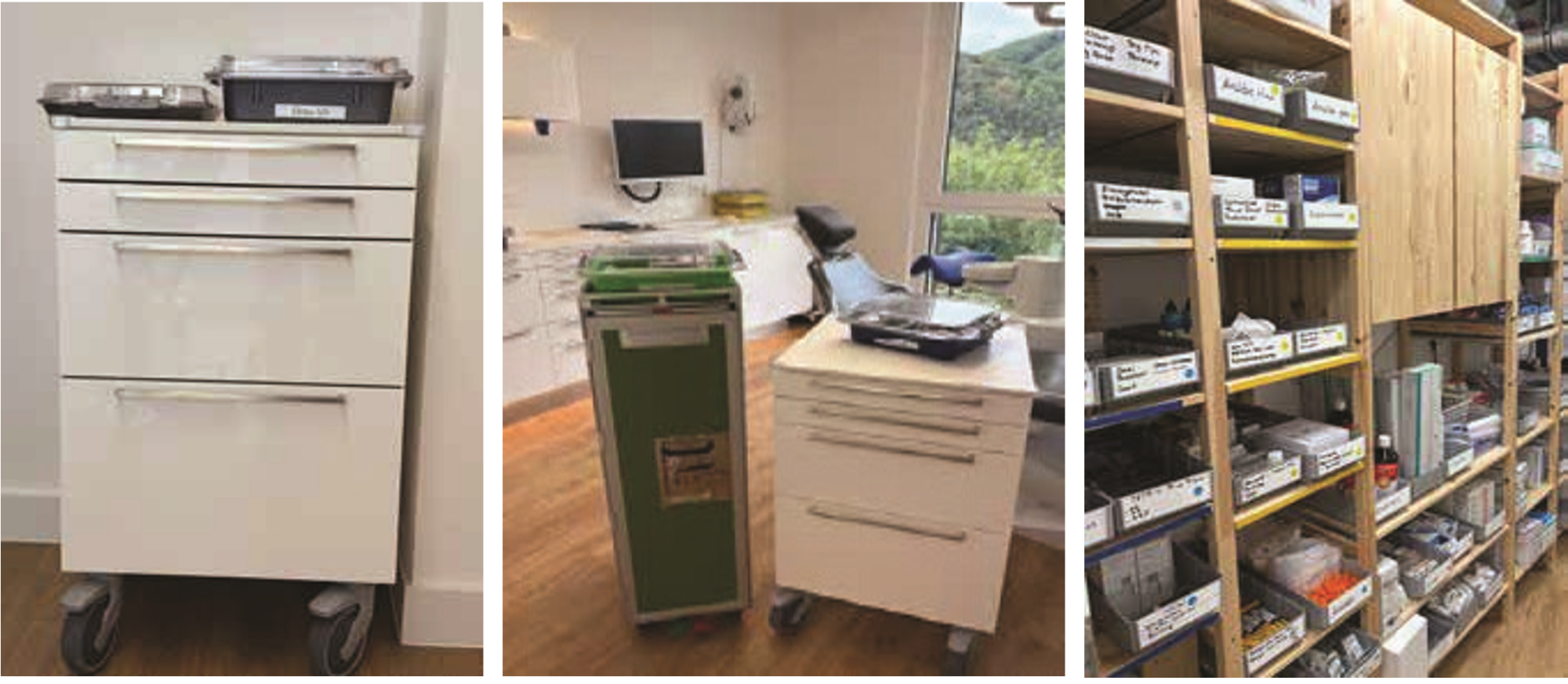
- Mobile carts connect inventory, cabinets, and treatment rooms - the color-code system guides the materials.
- The backstock of materials is organized in color-coded zones, with ordering, restocking, and inventory control all aligned to the same system.
Additional Tools
In cases of staff shortages, we use cooperative suction systems (e.g., Isovac) where appropriate, allowing us to consolidate tasks and carry out treatments independently.
THE RESULTS:
What We Gained After Implementation
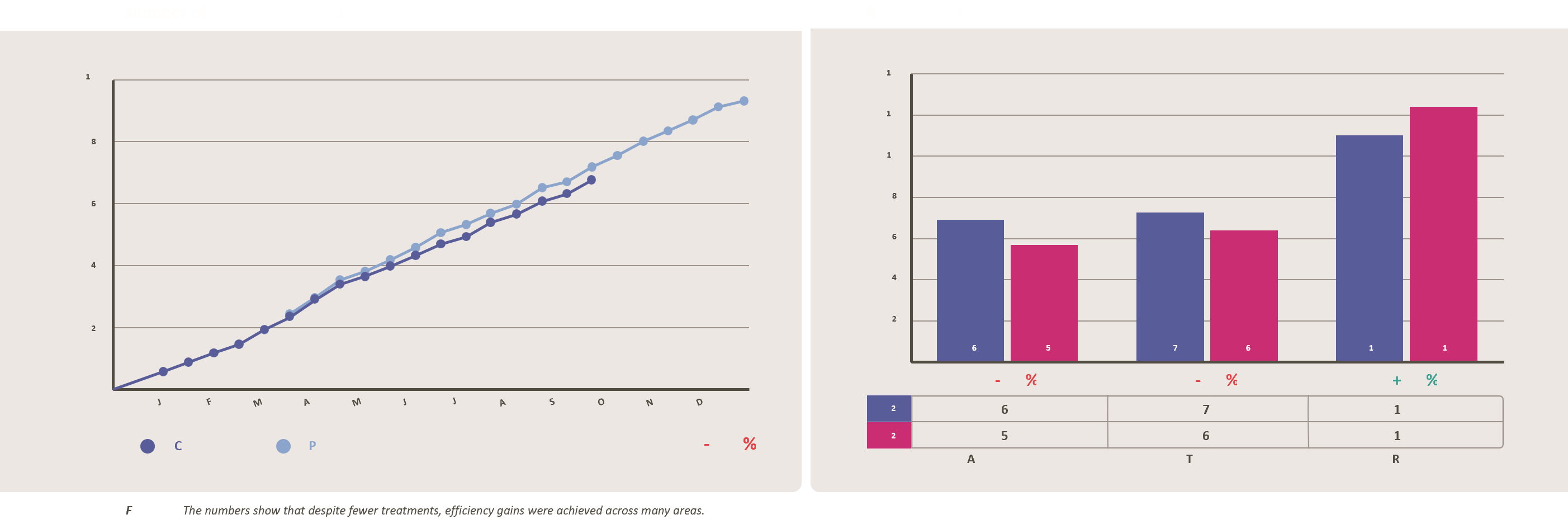
Productivity & Time: Standardized workflows boosted productivity by 12% - less material preparation, smoother processes, better hygiene, and quicker onboarding of untrained staff. Treatment times dropped from 33.4 to 29.7 minutes, saving about 5 minutes per treatment. At 9,600 treatments per year, this adds up to roughly 800 hours saved.
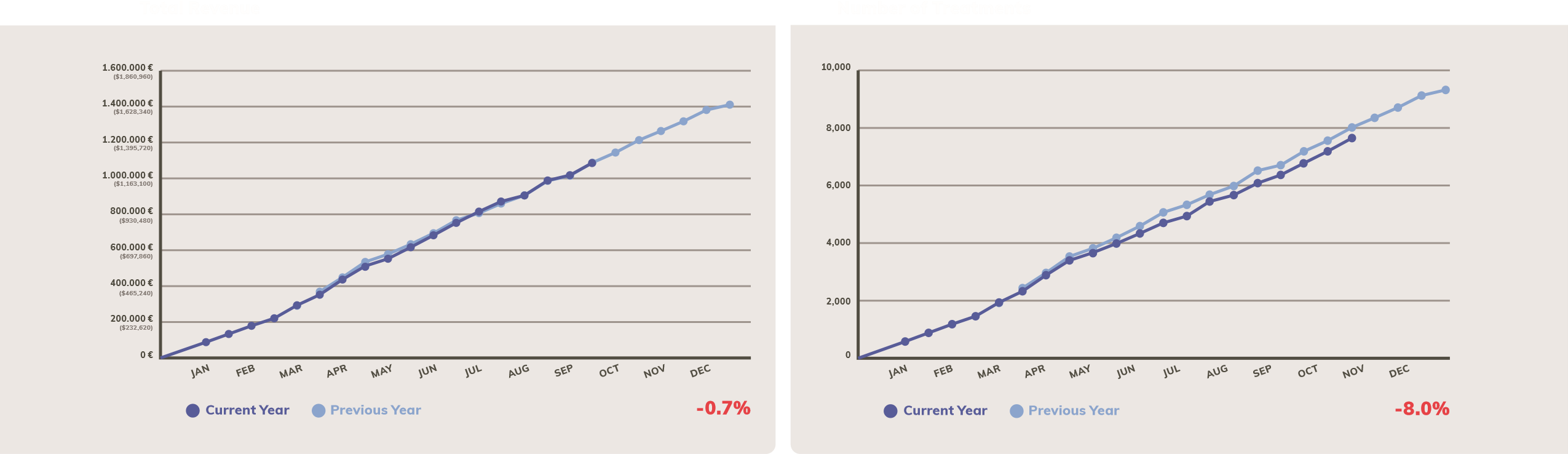
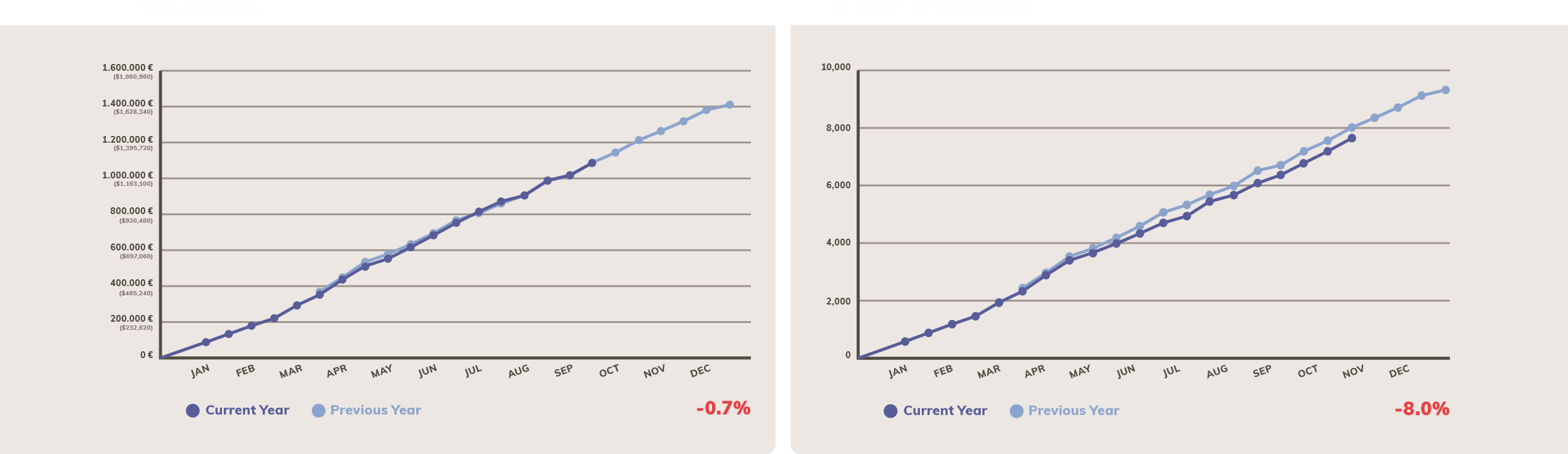
Economic Efficiency: Revenue per treatment rose 12%, and total revenue increased 13.2%, even though the total number of treatments fell by 9.6%. This demonstrates improved quality, better planning, and higher value per case.
Resource utilization & personnel: The assistant hours dropped significantly, from 7,257 to 5,790 hours (about a 20% reduction), while revenue continued to rise. These results underscore our goal of achieving the same output with fewer staff. Treatments can be performed solo, processes are simplified, and we can compensate for staff absences - vital in an environment with average sick leave of ~15 days per employee per year and ongoing personnel shortages.
Our conclusion: The color-coded system removes complexity from daily routines. It doesn’t replace professional expertise, but it gives it a clear, structured, and reproducible framework.
WHAT WE ENCOUNTERED ALONG THE WAY:
Challenges & Aha-moments
Pandemic, war, prices, supply chains: Construction dragged on, materials were temporarily unavailable, calculated budgets eroded. Our antidote: Standardize what we can influence - processes, routes, material logic.
The “aha” moment in everyday life: When we realized that every person on the team - regardless of experience - could confidently apply the same standards after a short training period, the tension eased. The error rate and search times decreased.
Team acceptance: We made the system our own: Regular short reflection loops (What is stalling? What is missing?) Discipline in compliance and visible successes (e.g., fewer no-shows, fewer questions).
WHAT YOU NEED FOR THIS
Our Recommendation

A Pragmatic Start In Three Steps
- List your treatment services (e.g., fillings, endodontics, surgery, prosthetics) and assign a color for each treatment.
- Color-code appointments and treatment rooms - define slots (recall, pain, long treatment windows).
- Organize procedure tray setups and procedure-material tubs according to the assigned color, extend the same system to sterilization and storage, and use carts as “transport” to move materials efficiently.
Sustainability as a Side Effect-and a Goal
Less material preparation, shorter transport times, clearer sterilization processes, and structured ordering are not only efficient but also sustainable - both environmentally and economically. This mindset shapes our daily practice and defines our public profile as a “Green Dental Practice” in Lahnstein.