page
Categories

Search Results for

Grid List
Filter By

All Results

  • Blog
  • Bone Milling: Perfect Harmony of Function and Feel

Article

Bone Milling: Perfect Harmony of Function and Feel


Interview with Dr. Adriano Azaripour By Dorothee Holsten

For Dr. Adriano Azaripour, instruments play an essential role in his surgical and periodontal work at the University of Mainz and in his practice in Bad Soden. Function and feel must form a unified whole. Using a patient case, he describes his high standards for his bur portfolio. 

Dr. Azaripour, what role does bone surgery play in your practice?


Figs. 1: Preoperative clinical situation. 

I bring an interesting mix to the table due to my dental background - I'm originally a periodontist and endodontist. Today, I cover all indications of modern hard and soft tissue surgery in my practice. However, periodontology is always present.

I firmly believe that one specialty cannot exist without the other. If we ignored the red aesthetics, for example during implantations, the results would be short-lived and aesthetically unsatisfactory. I specialized in microsurgical and plastic periodontal surgery during my training in my second home, Italy. This brings another layer to the mix: I combine knowledge and skills from both German and Italian dental education.

Why does nationality make a difference? Can you explain using instruments as an example?

Both Italian and German dentists strive for precision. However, Germans tend to be more pragmatic - tools should be quick, functional, and economical. Italians, on the other hand, love working with microscopes and are more detail-oriented. Treatment time becomes secondary. That’s why Italian dentists are big fans of sonic instruments. So, the path to aesthetic results differs slightly between the two countries.


What do you expect from a bone mill?

High cutting performance with maximum preservation of the bone. Only fracture-free blades can meet this requirement, enabling effective, gentle, and precise cuts. Bone mills must allow for exact preparation, which requires good control of the instrument. Patient comfort is also crucial - they can feel how smoothly an instrument runs. For tooth extractions, my favorite is the extremely fine Lindemann bur H254LE (Komet Dental).
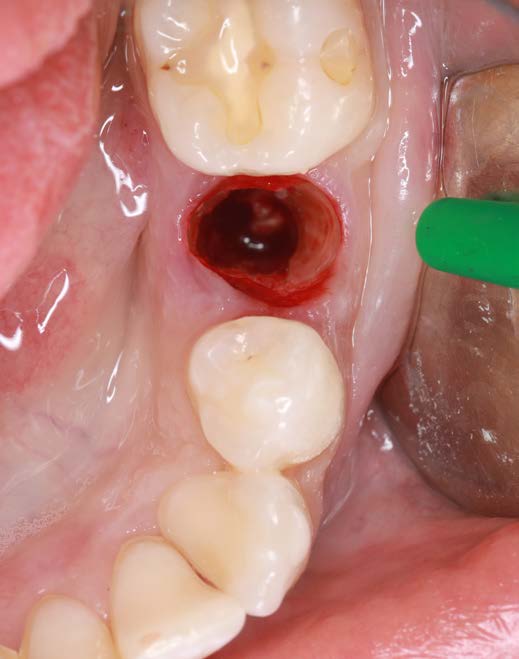

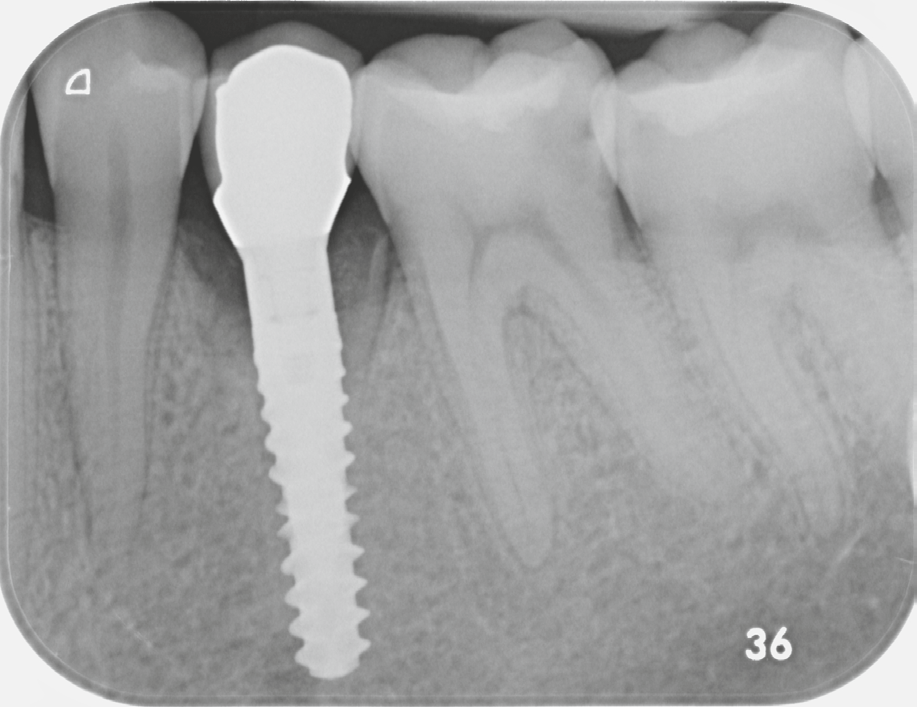
Figure 3: Condition after extraction and preservation of the buccal root portion

Figure 4: Condition after implantation


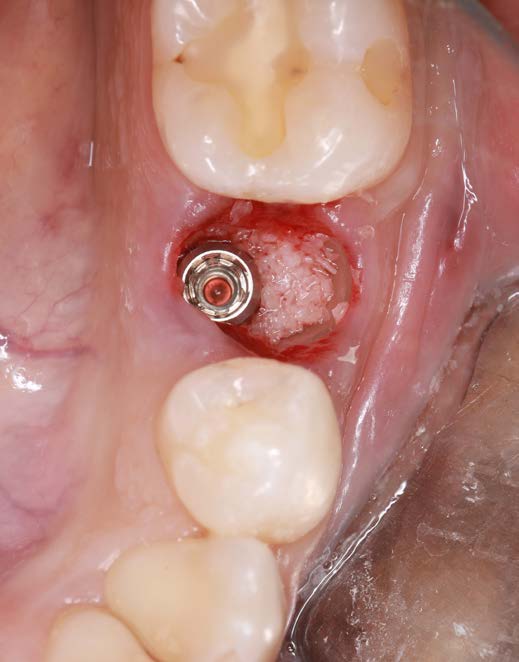
Figure 5: Condition after bone augmentation. 

Clinical Case Example

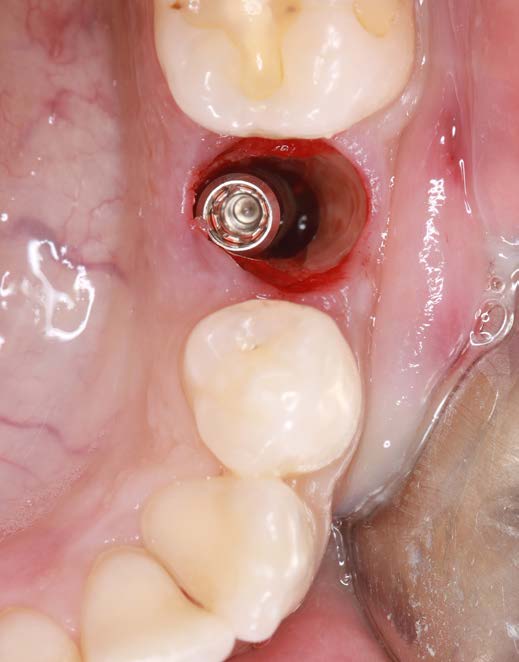
A 26-year-old female patient was referred to my practice. Tooth 35 was deemed non-restorable. A CBCT scan showed the buccal bone plate was missing. Especially in aesthetic zones, we aim to reduce tissue collapse post-extraction (up to 50%). We considered various ridge preservation techniques to minimize this risk.

Surgical Approach
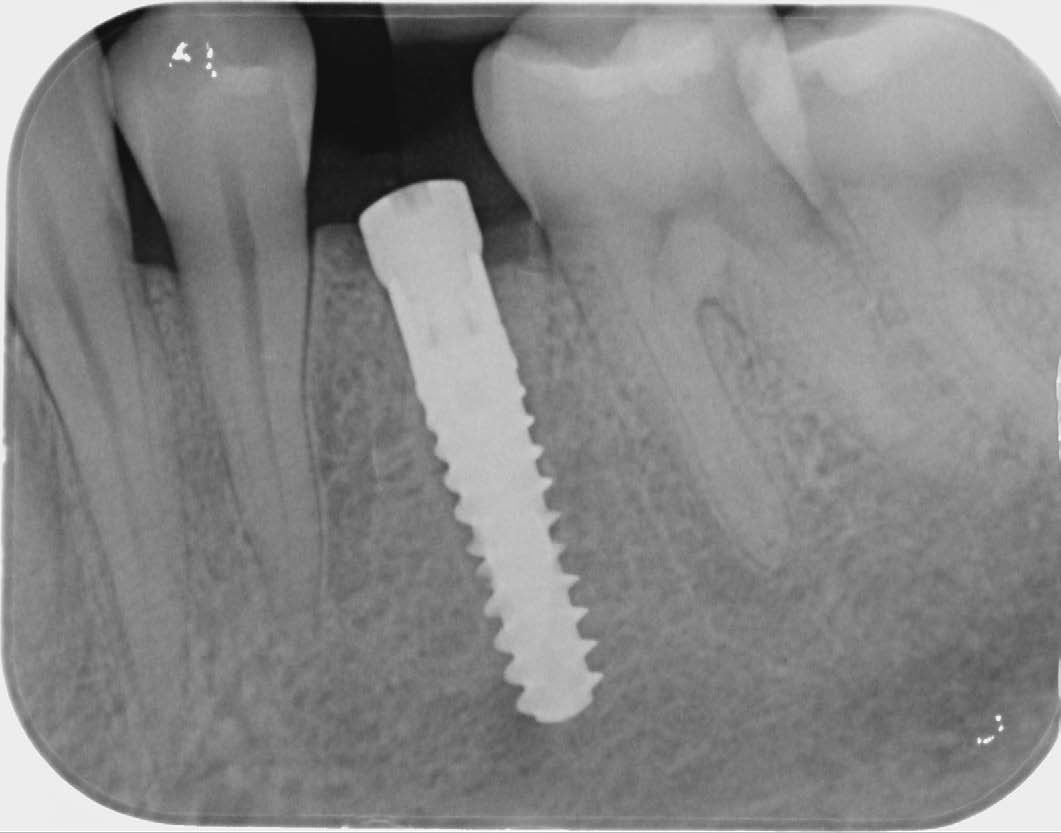

Fig. 6: Postoperative X-ray image of region 34, condition after immediate implantation. 

I chose the Socket Shield Technique, a minimally invasive method to reduce tissue shrinkage and achieve better long-term aesthetic outcomes. The technique requires healthy periodontal tissue and an intact root, both of which were present. The tooth is partially extracted, leaving the buccal root portion to support the soft tissue. This maintains the buccal periodontal attachment, allowing the tissue to behave as if the tooth were still in place. Hürzeler et al. introduced this technique in 2010 to reduce tissue shrinkage during immediate implantation.

Instruments Used

The Socket Shield Technique is not easy to perform. High-quality instruments are essential. Cuts must be fine and precise with minimal pressure. For this case, I used the H254LE 314 012 bone mill (Komet Dental) with a cross-cut design (right-right fluting), which runs smoothly and cuts efficiently. Its thin cut and controlled use in a red contra-angle handpiece make it ideal. I used it to section the tooth and shape the root remnant. Then, I refined the root with instruments 8831L, 831LEF, and ZR8801L (Komet Dental) - all of which allow fingertip control and effective cutting.

After osteotomy, I placed a 3.75 mm diameter implant, filled the gap between implant and root surface with allogenic bone substitute, inserted a provisional, and later restored with an aesthetic ceramic crown.  
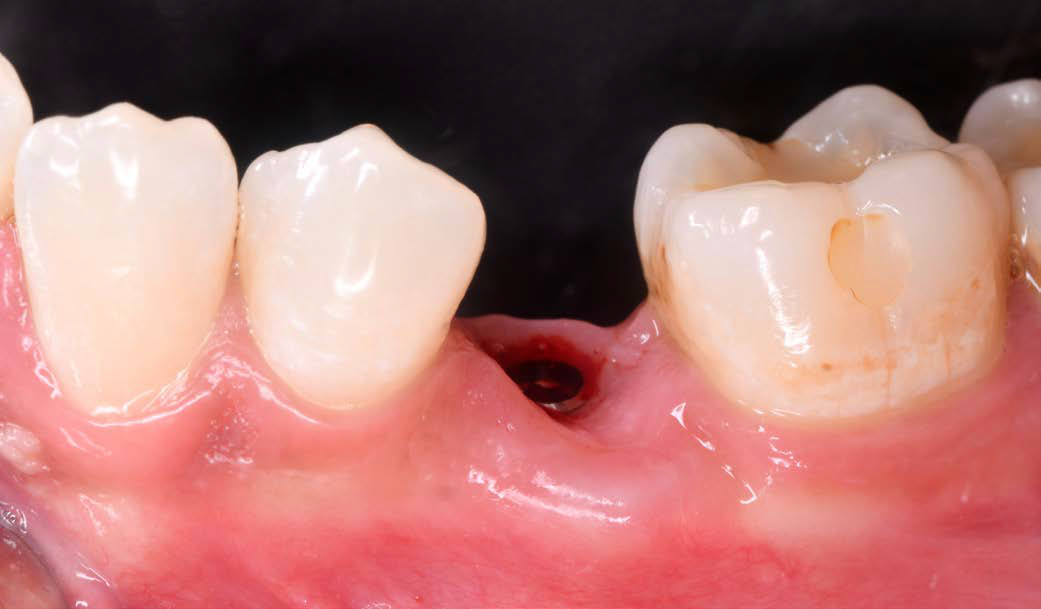

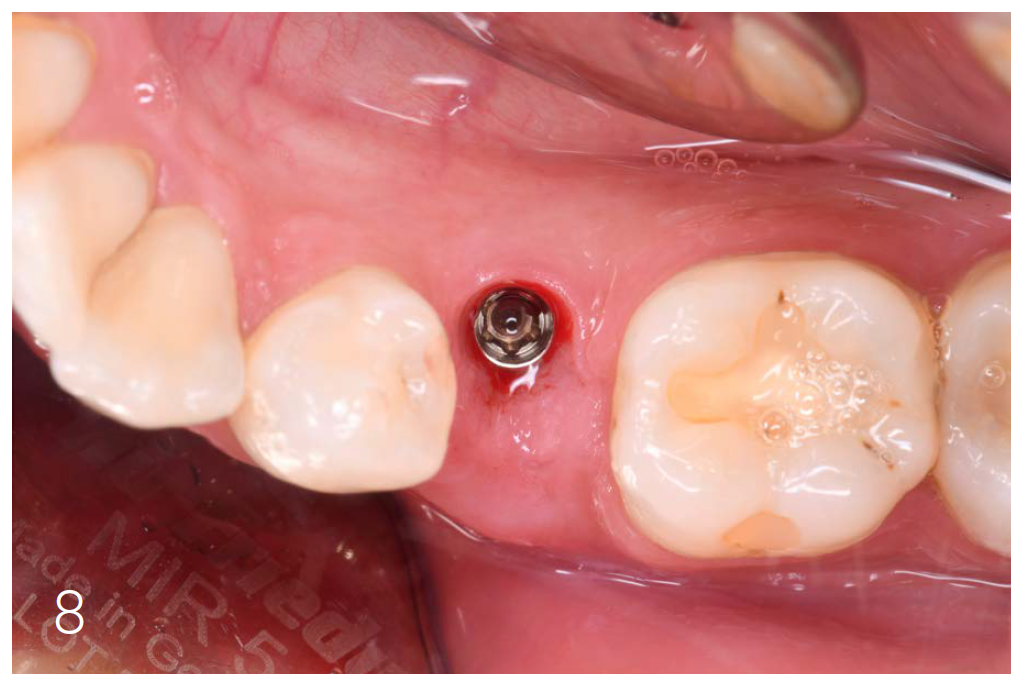
Figures 7 and 8: Clinical situation after 6 months


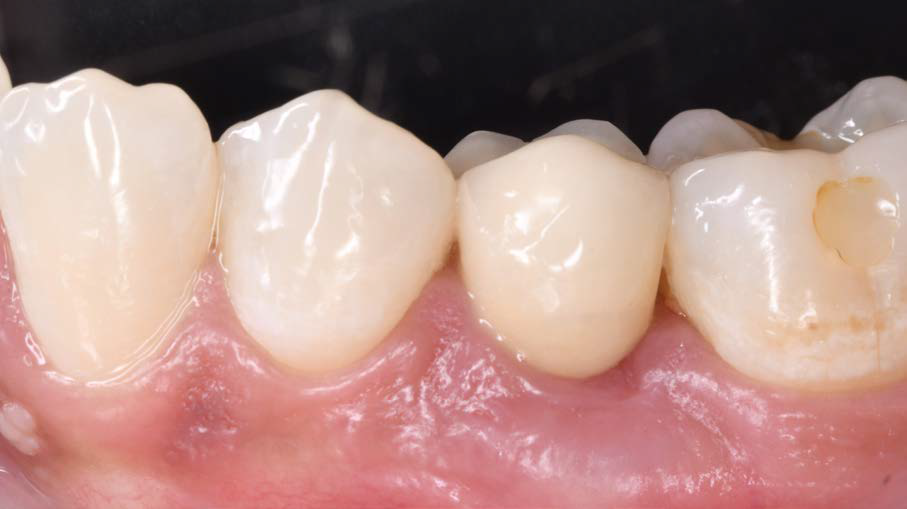
Figure 9: Clinical image after prosthetic restoration

Figure 10: X-ray image after prosthetic restoration.


Outcome

After six months, the soft tissue remained stable, and the papillae were well-formed. The case met all expectations for “pink-white aesthetics.” I was very satisfied with both the surgical and prosthetic results.

Reference: Hürzeler MB, Zuhr O, Schupbach P, Rebele SF, Emmanouilidis N, Fickl S. The socket-shield technique: A proof-of-principle report. J Clin Periodontol 2010;37:855–862.

More about Dr. Adriano Azaripour

Latest Blog Articles

Irradiance vs. Power: Curing Light Performance

Irradiance vs. Power: Curing Light Performance

As curing light technology improves, dentists are consistently sold on irradiance (mw per cm2) as being the defining factor in beam effectiveness. While there is no doubt irradiance adds value, it does not tell the full story of how well a light will cure various materials. Irradiance tests typically only show the irradiance of a very small portion of the light. Measuring the power distributed over the entire beam tells a more comprehensive story of its curing capabilities.

TePe EasyFit™ – An Easier Way Into a Healthy Routine

TePe EasyFit™ – An Easier Way Into a Healthy Routine

Many people find it difficult to establish a daily habit of cleaning between the teeth. TePe EasyFit™ is designed to lower the barriers and make it easier to start with interdental cleaning. Developed through extensive consumer research and tested by dental professionals across several countries, TePe EasyFit offers a simple, effective solution for patients who currently use floss, picks or interdental brushes only occasionally, or who lack motivation to begin using cylindrical interdental brushes daily at home. 

Instrument Management System

Instrument Management System

Opening an IMS™ Cassette in your practice makes a statement and tells your story. Adopting the Instrument Management System communicates that your practice is dedicated to improving efficiency, safety, compliance, organization, standardization, instrument protection, and more.

IMS is the helping hand that improves the flow of the facility, which allows the sterilization area to run more efficiently and clinicians to focus on providing Best in Practice levels of care.

Celebrating 80 Years of the Revolutionary Gracey Curette

Celebrating 80 Years of the Revolutionary Gracey Curette
This Dental Hygiene Month, we celebrate 80 years of the Gracey Curette: a revolutionary instrument that transformed dental hygiene. Since its introduction in 1945, it has expanded into a family of designs that continues to improve patient outcomes and hygienist ergonomics.

The right pH for both the patient and the dental practitioner

The right pH for both the patient and the dental practitioner
A 2004 study showed that patients judge their dental practitioner first and foremost on their skill in giving pain-free injections. Injections do not have to be something to fear – on the contrary, they can be the first step in a relationship of trust with the practitioner.