Irradiance vs. Power: Curing Light Performance
As curing light technology improves, dentists are consistently sold on irradiance (mw per cm2) as being the defining factor in beam effectiveness. While there is no doubt irradiance adds value, it does not tell the full story of how well a light will cure various materials. Irradiance tests typically only show the irradiance of a very small portion of the light. Measuring the power distributed over the entire beam tells a more comprehensive story of its curing capabilities.
When comparing irradiance and power, think of power as the overall amount of light being put out and irrandiance as how much light is put out over a certain area. Compare, if you will, polymerizing a restoration to lighting a room. There’s a bulb in the center of the ceiling, and you’re standing below with a funnel. You can cover the bulb with the funnel shaped reflector and direct all the light into one small, bright spot, with most of the room remaining dark. Or you can let the bulb’s brightness cover the room evenly and be able to see everything.
Uneven cures can lead to patients experiencing issues.
Dentists need to stop looking only for the irradiance value, and instead, look for power value as well as a good irradiance value,” says Ultradent VP of Research and Development, Neil Jessop. “Irradiance isn’t the only metric dentists should be looking for—they should be looking for power evenly distributed over the entire surface of the tooth.”
A beam with a small, superhot center will unevenly cure a composite. A beam with uniformly dispersed power throughout provides a superior, more predictable cure. Equally distributed power allows a dentist to center the light over a tooth and fully cure the entire restoration without creating hotspots and leaving areas under-cured.
Misleading Measuring
Many of the misconceptions built around irradiance stem from how it’s historically been measured. Traditional light meters, which remain the most common found in dental offices, aren’t giving dentists an accurate assessment of their curing light’s capabilities.
“Most meters that are available in the world measure the center of the light,” Jessop says. “[Measuring devices] sample a very small part of the beam and you may be on a particular hot spot and not realize that it’s just measuring how dense the light is, or how much light is sitting in that particular spot.”
By measuring the center hotspot only, these meters ignore significant amounts—if not the majority of—the actual lens/footprint of the light. The hotspot will have a curing ability slightly wider than the hotspot itself, but the overall target can be missed. Distributing power evenly over a larger area ensures a more consistent, quality cure compared to lights with small hotspots.

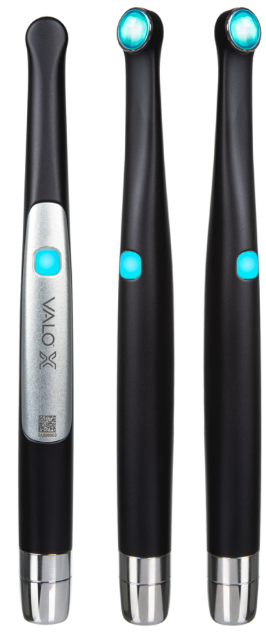
The new VALO™ X curing light is equipped with one-button activation, as well as an accelerometer, so users can cycle between the light’s power and diagnostic modes with just the wave of the wand, a light drum tap, or the push of a button.
Jessop says he frequently sees ambiguous—if not disingenuous—marketing materials given to dentists. “The way these companies are misleading customers is that they’re measuring the hotspot of their light, which may have a very high irradiance, but which covers a very small area, compared to VALO™ X [light] which has twice the power evenly distributed over a much larger area.”
Measuring accurately
Ultradent’s research and development team created a meter to help dentists measure a light’s power and irradiance more accurately. “The only way you can accurately measure a curing light is with a meter that takes into the account the entire area of the light with a window that’s bigger than the light, which is something that we have and sell.” He adds, “I know it’s technically confusing. Power—which is how much light your device puts out, versus irradiance, which is how much light your device puts out over a certain sampled area, can easily be manipulated (without the right meter.) (The Ultradent meter) is what you’re going to want when you’re measuring a light’s power to get a true power reading,” Jessop stresses.
Why Power Matters
A curing light with a large, uniform footprint and good power output from the entire lens allows the user to hold the light in place over the tooth and be assured that it will polymerize the entirety of the restoration, every time—compared with having to move the light around the tooth, worrying and wondering if the hotspot thoroughly cured every area of the restoration.
“Ultradent’s VALO X curing light is nearly foolproof in that it doesn’t have a hotspot, and it distributes more total power over the entire footprint, which makes curing the entirety of the area a lot easier,” Jessop says. “The goal is to have every square millimeter of the tooth get the same amount of light like with the VALO X curing light. Where with other lights, they’re often only covering maybe 50% of the tooth. Their bright spot may be tiny. It’s unfortunate because many
doctors are misled to think that the entire tooth is getting that ‘irradiance measurement’ that the company is claiming, when only a tiny spot of the light is doing the work, leaving the rest insufficiently cured.”
That’s not to say the VALO X doesn’t provide excellent irradiance and collimation. The difference is, the VALO X evenly distributes it. “It’s all about the beam uniformity and coverage,” Jessop adds.
When Choosing Your Curing Light
Clinicians in the market for a quality curing light want something that will completely and dependably polymerize all light cure dental materials. However, a light’s purported irradiance doesn’t often represent the full picture, in terms of overall power.
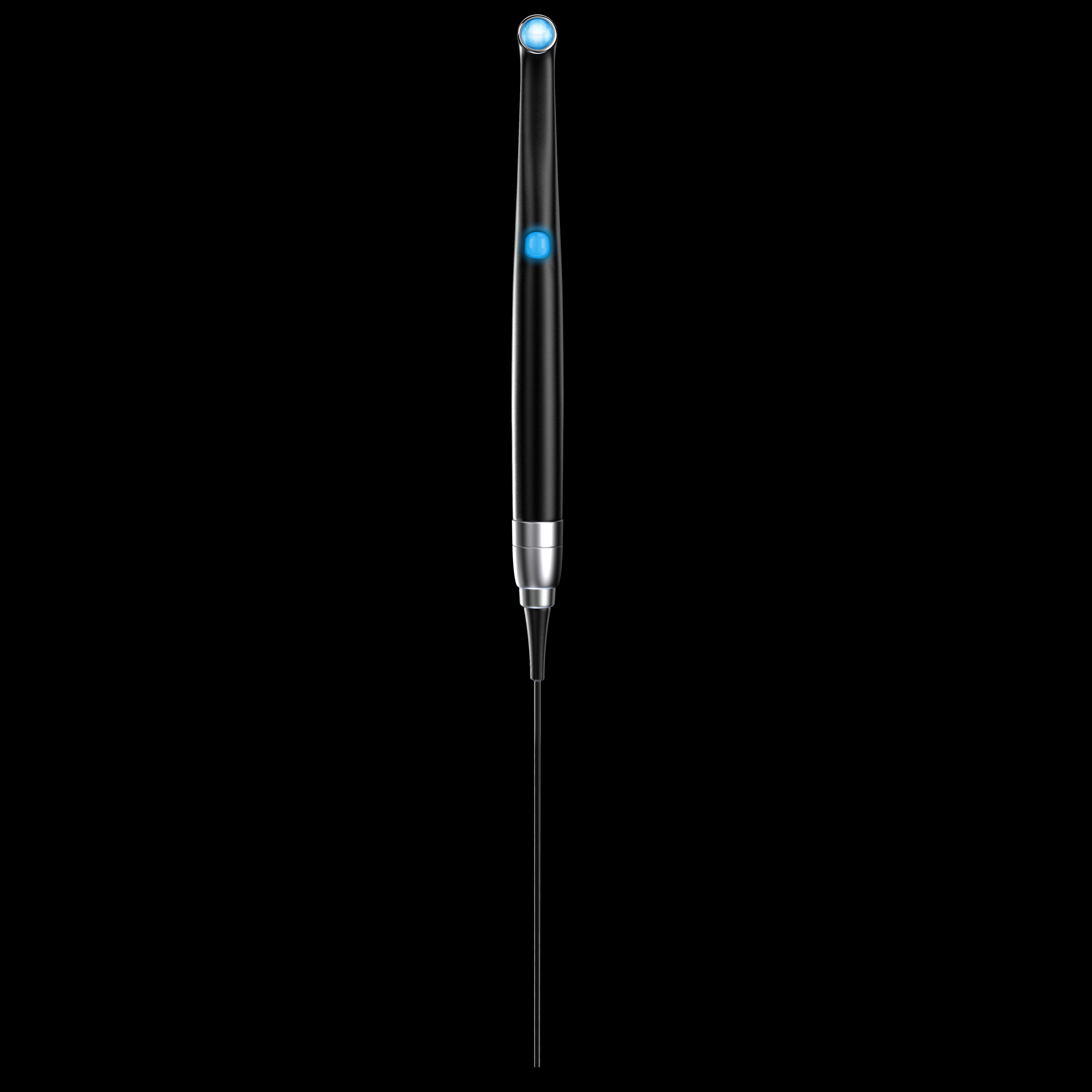
The VALO X curing light is available in both corded (pictured here) and cordless, and features improved curing depth, beam collimation, and thermal management.
Instead of measuring a light’s irradiance in one hotspot, clinicians should look at how evenly the light’s power is spread out. “Generally speaking, dentists should aim for light with power uniformity. You want to cover more tooth without oversaturating any areas,” says Jessop.
Click here to learn more about the other innovative features that make Ultradent’s VALO X curing light one of the most innovative and groundbreaking dental curing lights on the market—and check out the predecessor, the VALO™ Grand curing light, the only curing light ever sent to space.
Not all dental curing lights are created equal and it’s crucial to understand the differentiating factors between lights before investing in one for your office. Irradiance vs power, beam size, even the tools used to measure light outputs all play major roles in how a curing light will function. To find true quality and efficiency in a light, a user must be able to wade through the waves of false and misleading claims often made in the world of dental curing light advertising—Ultradent’s Sr. VP of Research & Development, Neil Jessop, delves into these topics and more in this edition of Dentistry Decoded: Insights from R&D.