In a market crowded with promises, Komet Dental stands apart for one simple reason: we engineer every instrument with uncompromising precision,
consistency, and clinical purpose. Our competitive advantage isn’t a slogan — it’s built into the steel, the diamond grit, the carbide matrix, and the performance
clinicians feel in every preparation.
Below is a deep dive into what truly differentiates Komet and why our burs consistently outperform in efficiency, longevity, and patient comfort.
1. Diamond Burs: Precision Starts at the Grain
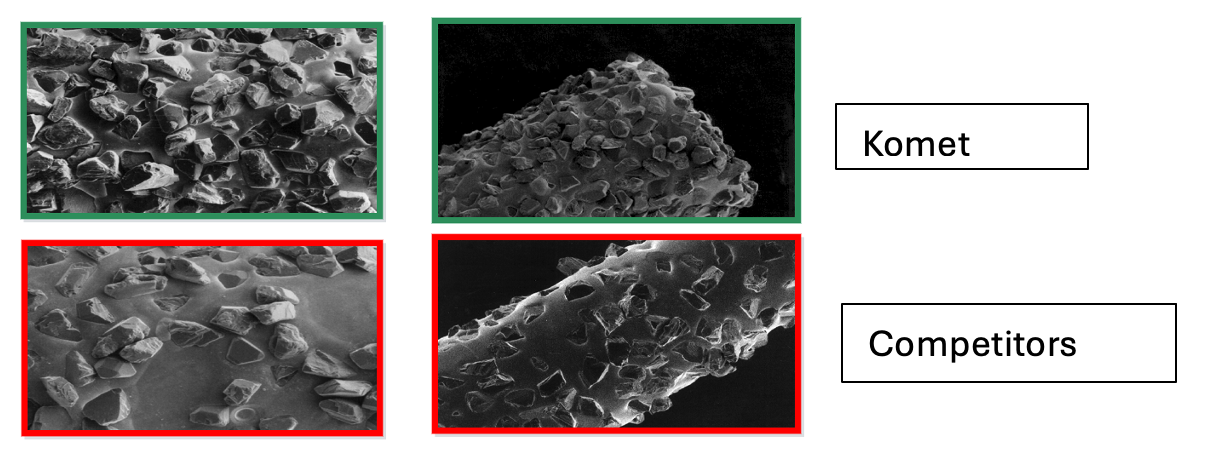
Most diamond burs look similar on the surface — but the real difference lies beneath it. Komet’s diamond instruments are engineered with a level of detail that directly translates into clinical excellence.
Uniform Diamond Grain & Even Bonding
Komet uses uniform diamond grain sizes and even bonding across the entire working part. This ensures:
- Predictable cutting performance
- Smooth, scratch‑free surfaces
- Consistent results from super‑coarse to ultra‑fine grits
“Even bonding… Uniform size… No premature loss of the diamond grains.”
Optimal Embedding Depth (~2/3)
This is one of the most critical — and overlooked — factors in diamond bur performance.
Komet’s controlled embedding depth delivers:
- Excellent efficiency
- Longer service life
- Reduced vibration
- More exact preparations
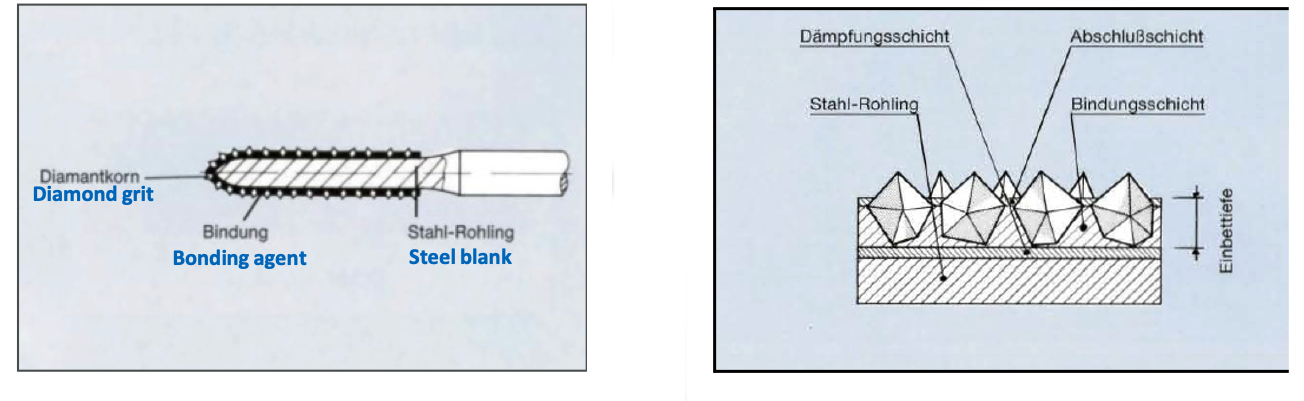
Too shallow and the grains shear off. Too deep and the bur cuts poorly. Komet’s precision hits the perfect balance every time.
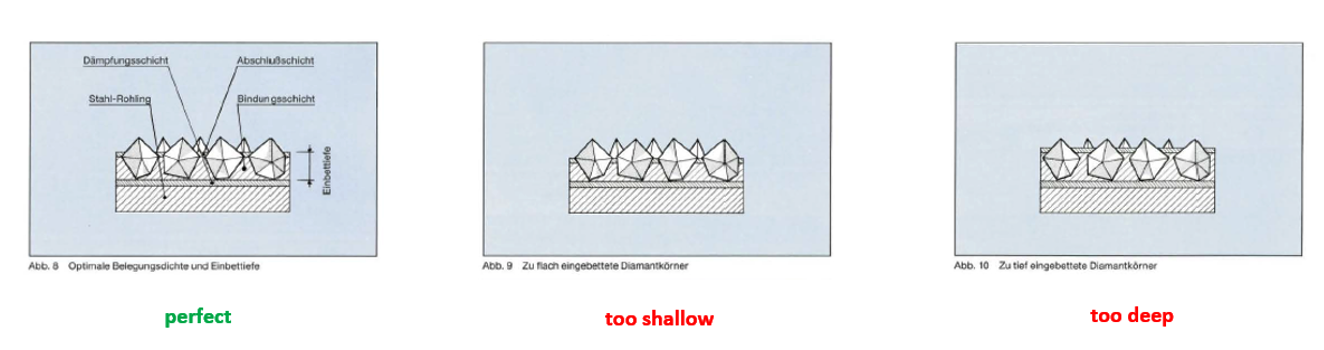
The Vibro‑Cushion Layer
A unique cushioning layer between the steel blank and diamond coating absorbs micro‑vibrations, resulting in:
- Smoother cutting
- Less heat generation
- Greater patient comfort
- Reduced handpiece wear
This is a subtle engineering detail with a major clinical impact.
2. Stainless Steel Blanks: The Foundation of Accuracy
A bur is only as good as the blank it’s built on.
Komet blanks are:
- Made from stainless, hardened steel
- Manufactured using a deep‑grinding process
- Engineered for perfect concentricity
This results in:
- Minimal vibration
- Precise cutting
- No “deflection”
- Reliable chucking
- Longer handpiece life
“Perfect shapes, dimensions and concentricity lead to less vibrations and precise cutting.”
These fundamentals are why Komet burs feel stable, balanced, and predictable at high speeds.
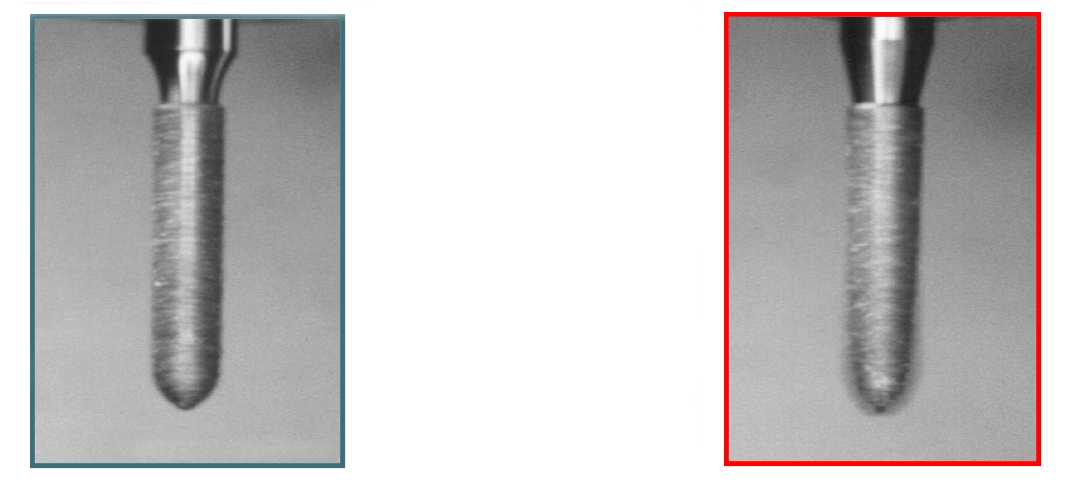
Komet. Competitor
3. Tungsten Carbide Burs: HIP Technology Sets Us Apart
Tungsten carbide burs are where Komet’s material science truly shines.
High‑Quality Raw Material
Komet uses a fine‑grained carbide matrix hardened up to 1600 HV, ensuring:
- Sharp, durable blades
- Clean, atraumatic cutting
- Longer service life
Hot Isostatic Pressing (HIP)
This is a major differentiator.
HIP produces:
- A pore‑free, fine‑grained structure
- Blades without nicks or notches
- Superior cutting precision
“Fine grained, pore free structure… Sharp blades without nicks and notches.”
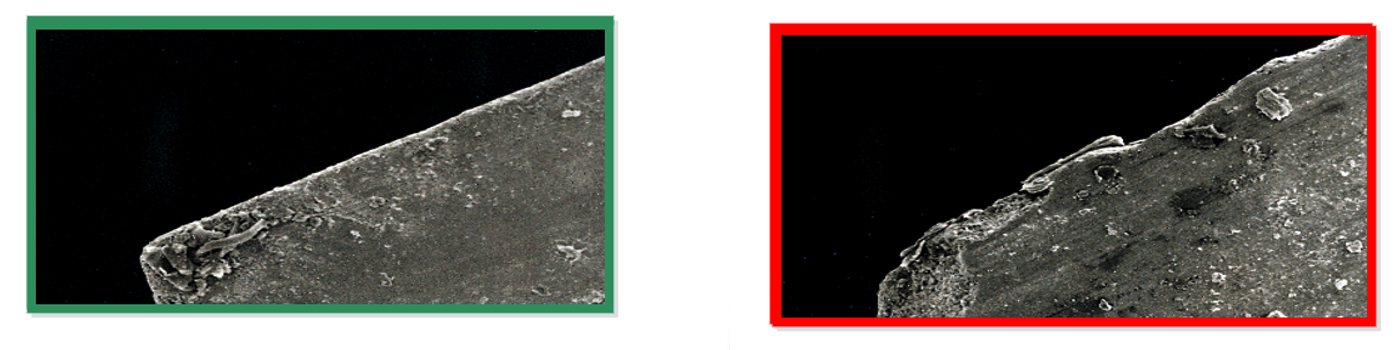
Komet. Competitor
Competitors using coarse‑grained carbide produce burs that fracture, dull quickly, and create irregular surfaces.
Two‑Piece Construction for Flexibility
Komet’s special soldered joint between shank and working part provides:
- Greater flexibility
- Reduced fracture risk
- Lower vibration
- More comfortable patient experience
This is especially important under mechanical stress or when cutting harder materials.
4. Clinical Benefits That Matter
Across both diamond and carbide burs, Komet’s engineering delivers real‑world advantages:
For Clinicians
- Faster, more efficient cutting
- Less heat and vibration
- More predictable outcomes
- Better surface quality for restorations
- Longer instrument lifespan
For Patients
- Less discomfort
- Reduced trauma
- Shorter chair time
For Practices
- Lower replacement costs
- Fewer handpiece repairs
- Consistent quality across every bur
5. The Komet Difference: Built, Not Claimed
Komet’s competitive advantage is rooted in:
- Material science
- Precision engineering
- Rigorous quality standards
- Decades of innovation
Every layer — from the steel blank to the final diamond coating — is designed to deliver superior performance, reliability, and clinical confidence.
Komet doesn’t just make burs. We make instruments that elevate dentistry.
For all things Komet visit us at https://henryschein.com.au/komet